The problem isn't AI. It's that nobody told you what's happening out there.
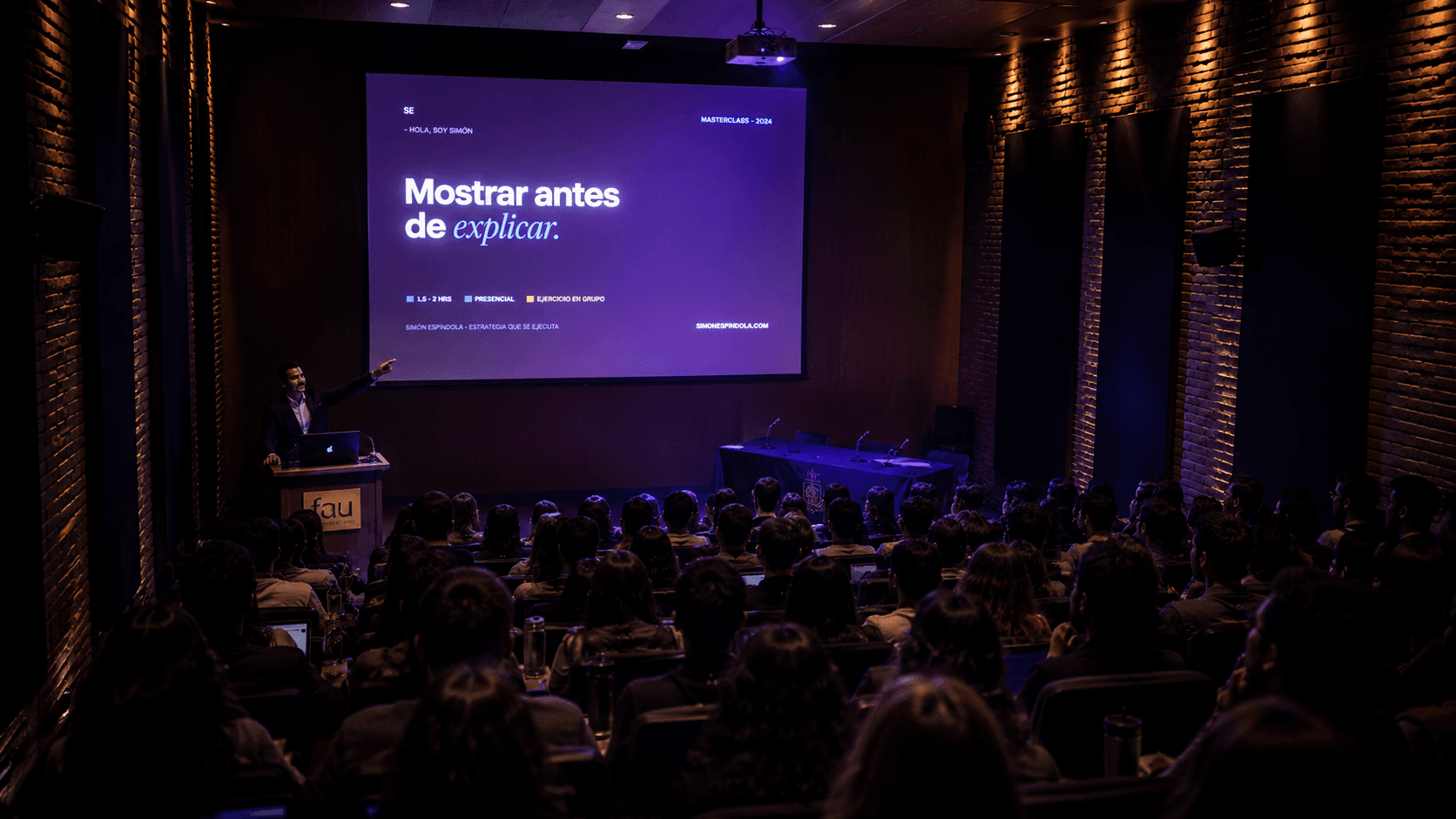
Graphic design is the 11th fastest-declining job according to the WEF. I went and told that to sixty students at Universidad de Chile. Without the comfortable talk.
After reading this, you'll understand why the designer who isn't using AI today isn't competing in the same market as the one who is. And why that gap can no longer be closed in a semester.
When Víctor Molina invited me to teach a class at the Faculty of Architecture and Urban Planning at Universidad de Chile, I accepted with an implicit condition I never said out loud: I wasn't going to give a comfortable talk.
There are enough comfortable talks about the future of design. The one that says AI "is just another tool." The one that says "human creativity will always win." The one that ends with applause and changes nothing.
What I wanted to show those sixty students was something else: the real distance between what they're learning and what's happening outside.
The numbers nobody puts in the syllabus
The World Economic Forum published its Future of Jobs report in January 2025, based on interviews with more than a thousand employers across 55 countries. Graphic design appears as the 11th fastest-declining position projected over the next five years. In the previous report, two years earlier, it was considered a moderately growing field.
That shift isn't gradual. It's a free fall in two years.
In parallel, job listings for graphic designers dropped 33% in 2025. Only 31% of designers use AI for core work. The correct reading of that isn't reassuring: most of the industry hasn't adopted the tool yet, while the market has already reconfigured what it needs.
Workers with AI skills earn 56% more than their peers in identical roles without those skills, according to PwC 2025. A year earlier, that gap was 25%. It's not closing. It's widening.
And Latin America, in that context, is growing in AI adoption at 28.1% annually — below the global average of 31% (Linux Foundation, 2025). Chile leads in the region. But leading in the region and being ready for what's coming are two different things.
What happened in that room
The class was on May 7th. Sixty graphic and industrial design students, third and fourth year. Ninety minutes.
The content was Scrum and Kanban adapted to the design process: how to structure a sprint, how to make visible the work that's normally invisible, how to arrive at the first client meeting with something real on the table instead of words that everyone interprets differently.
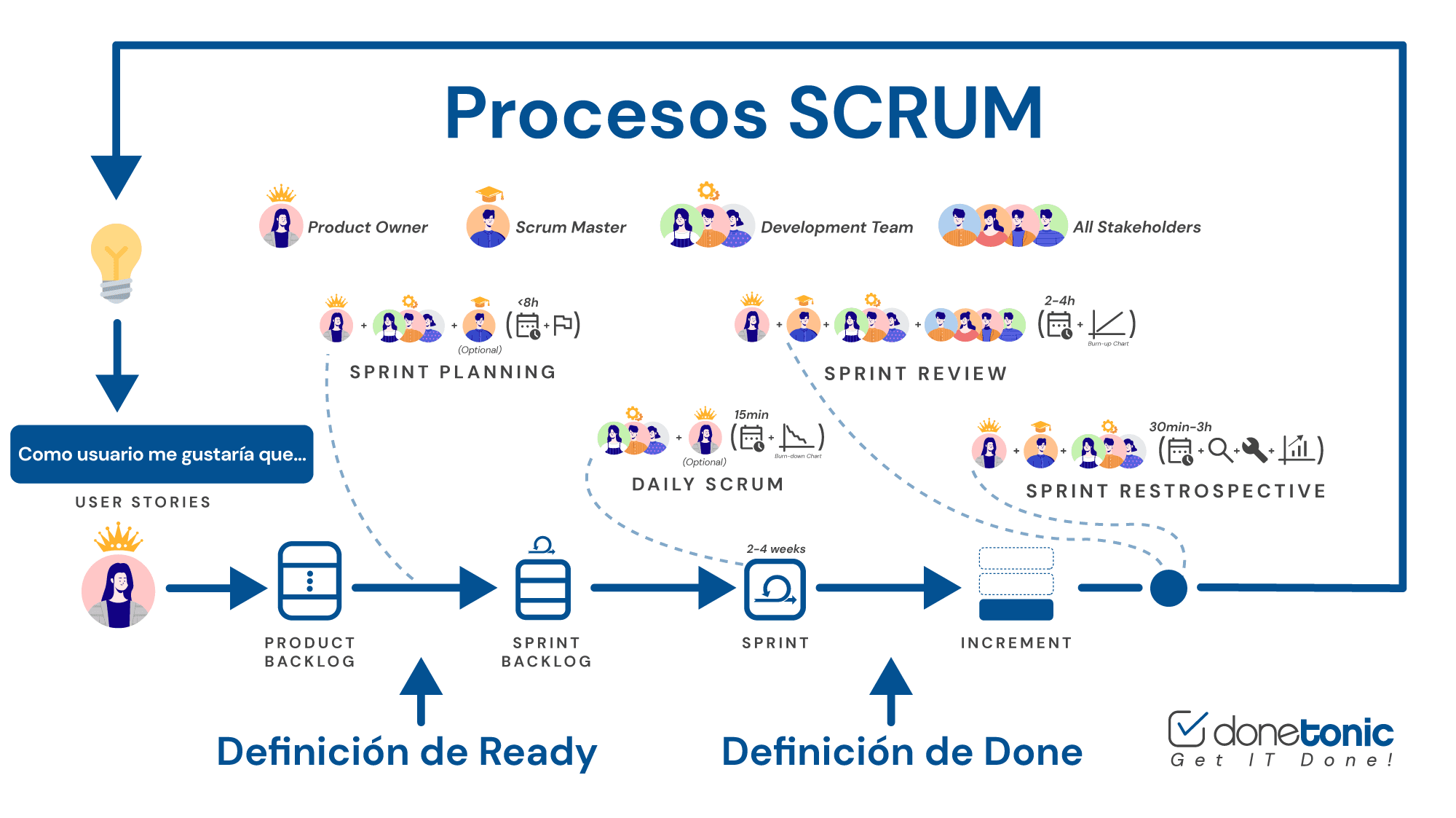
Twenty groups worked in parallel. Each one with a fictional client, defining what they were going to show, with which tool, and what conversation they wanted to have based on that first visual increment.
The exercise wasn't about speed. It was about changing the sequence of the conversation with the client. Show before you explain.
At the close, I opened GPT Image 1.5 live in front of everyone. In minutes: three complete creative directions for a restaurant, with logo, color variations, palette, facade, menu, uniforms, and packaging. What in the traditional workflow takes weeks of conceptual process happened while sixty people watched.
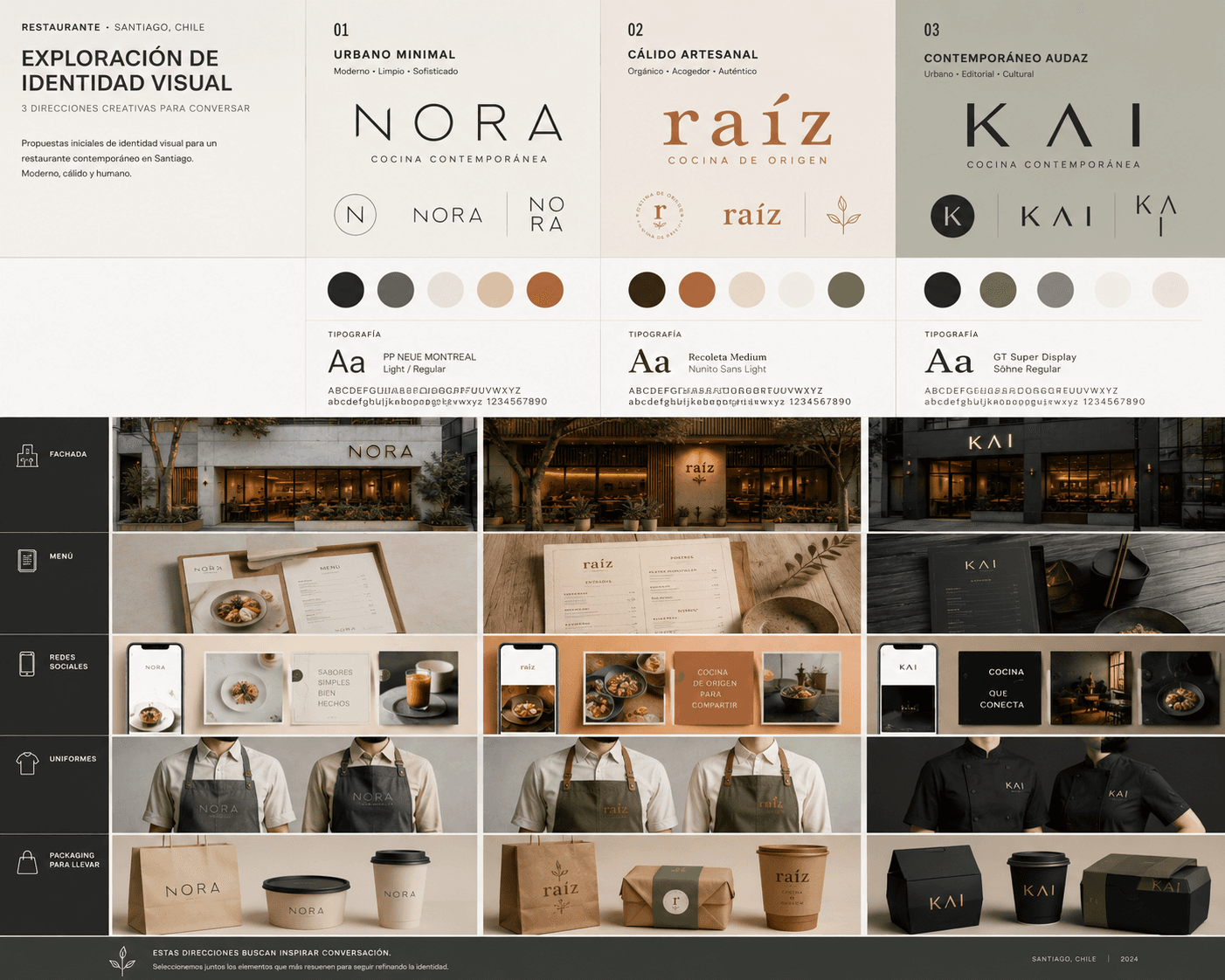
The "woah" was unanimous.
But the important thing wasn't the technological wow. It was the collective recognition of a gap. Many of them had never used these tools for real work. Not from lack of access, but because nobody had told them it was urgent.
What I told them at the end
I didn't use the typical phrase about AI not replacing designers. That phrase doesn't cut it anymore.
What I told them was this: show first, show fast, and have the conversation based on that. Don't fear AI — use it before it's too late.
Updating yourself isn't the university's responsibility. It's yours. And it's not a long-term project — it's a weekly practice.
The WEF links graphic design's new at-risk status directly to AI growth and its "increasing ability to perform knowledge work" (Future of Jobs Report 2025, WEF). That's not alarmism. It's the context in which these students will be looking for their first job in two years.
The tool doesn't do the work of judgment, taste, and craft. That 40% still belongs to the designer. But the 60% of execution that used to take weeks now takes hours. Whoever doesn't have that workflow built in isn't competing slowly. They're competing in a different game without knowing it.
Thanks to Víctor Molina for the invitation and for believing these students deserve an honest conversation about what's coming. Thanks to the students at Universidad de Chile for the genuine "woah" and for the real work of those ninety minutes.
I hope it was uncomfortable enough that something changes.
When was the last time someone showed you real data about your industry instead of just cheering you on? What did you do with it?
Sources
- World Economic Forum. Future of Jobs Report 2025. January 2025.
- PwC. Global AI Jobs Barometer 2025.
- Linux Foundation. Economic and Workforce Impacts of AI in Latin America. 2025.
- Startup House. AI in Product Development Report 2025.
- Figma. AI in Design Report 2025.
- riskquiz.me. Will AI Replace Graphic Designers? 2026 Risk Analysis.
Simón Espínola
Economist · Strategist · Builder
I work with founders and companies that want to grow with structure. If this resonated, let's talk.
Subscribe
Essays every two weeks. No spam.